

Finding information online should be simple, but search results often make it harder than necessary. A quick question can lead to copied explanations, outdated pages, and articles that take too long to reach the point.
Crackstube is designed to give readers a clearer way to explore useful information. The website publishes guides, explanations, and articles across technology, entertainment, business, education, lifestyle, online safety, and trending topics.
You can visit Crackstube with a specific question in mind or simply browse until you discover something interesting. Either way, knowing how the website is organized can help you reach the right content faster.
This practical guide explains how to use Crackstube, search for articles, browse content categories, follow related topics, evaluate information, and get more value from every visit.
Where Can You Find the Official Crackstube Website?
The official website discussed in this guide is:
Checking the complete address is important because similar names can appear on unrelated websites. A logo or familiar word does not prove that a page belongs to the same platform.
Before browsing, confirm that the domain is crackstubeus.com and that the connection uses HTTPS. If a different website asks you to download unknown software, disable browser protection, or enter sensitive information, leave the page.
Crackstube is presented as an informational publishing platform. Reading ordinary articles should not require cracked applications, unusual browser extensions, or payment details.
Starting From the Crackstube Homepage
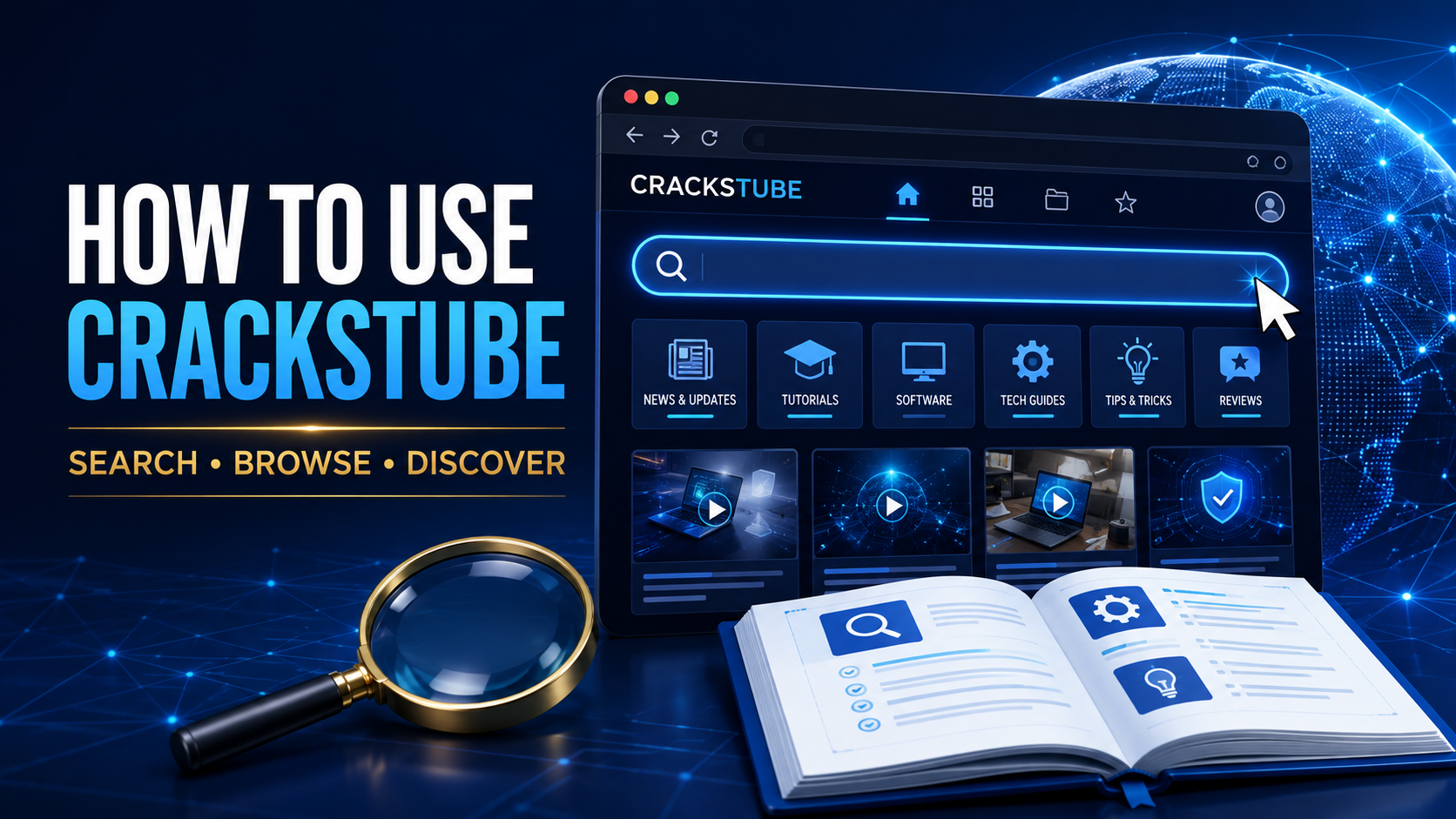
The Crackstube homepage is the best place to begin when you do not have one exact topic in mind. It introduces the platform and provides access to published articles, highlighted content, categories, and the website search feature.
The homepage can help several types of visitors:
- New readers who want to understand what Crackstube covers
- Returning visitors looking for recent articles
- Readers browsing for an interesting topic
- People who want to move into a particular content category
- Visitors searching for a specific guide
Rather than treating the homepage as a page to pass through quickly, use it as a map. Look at the latest posts, category labels, article titles, and related links. These elements show how the website’s topics connect.
Using the Crackstube Search Feature
The search function is the fastest option when you already know what you want to find.
Enter a clear word or short phrase related to your question. Specific searches normally produce more useful results than long sentences filled with unnecessary words.
For example, instead of searching:
“I want to understand whether the Crackstube website is safe for me to visit on my phone,”
try:
Crackstube safety
Other useful search examples include:
- technology guides
- movie explanations
- word meanings
- online safety
- business tips
- trending topics
- how-to guides
If your first search does not produce the expected result, simplify it. Remove filler words, try a synonym, or search for the broader category.
Spelling also matters. A misspelled name may return no results even when a relevant article exists.
Searching With a Primary Keyword
A primary keyword is the main subject of an article. Using it in the search box can help you find the most relevant page quickly.
Suppose you want information about a particular actor. Search the actor’s name rather than a vague phrase such as “the person from that action movie.” If you want the meaning of a religious term, search the term itself and add meaning or Bible if that context matters.
Useful keyword combinations include:
- Topic + meaning
- Website name + safe
- Movie title + cast
- Person’s name + movies
- Application name + features
- Term + explained
- Topic + guide
The website search can only match the content that has already been published. If there is no exact result, a broader query may lead to a related article.
Browsing Crackstube Content Categories
Categories are helpful when your interest is broader than one keyword. They group related articles so you can explore without performing a new search every time.
Technology
The technology category may include applications, websites, artificial intelligence, social media, software, online tools, privacy, and digital trends.
Browse this section when you want to understand what a tool does, how a platform works, or what to consider before using an online service.
Entertainment
The entertainment category can include movies, television series, actors, characters, games, music, and popular culture.
It is useful for readers who want background details, cast information, story explanations, career profiles, or updates related to entertainment subjects.
Business
The business category may cover entrepreneurship, branding, marketing, productivity, customer experience, workplace communication, and online business tools.
These articles can introduce concepts and help readers identify questions to consider before choosing a strategy.
Education and Meanings
The education category can explain definitions, name origins, historical context, religious terms, career concepts, and frequently misunderstood ideas.
This section is especially useful when a one-line dictionary definition does not provide enough context.
Lifestyle
The lifestyle category may include home topics, routines, travel ideas, relationships, shopping considerations, personal growth, hobbies, and practical everyday guidance.
Lifestyle advice should be treated as general information because personal needs, health, budgets, and circumstances vary.
Online Safety
The online safety category helps readers recognize suspicious websites, phishing attempts, misleading downloads, unsafe permissions, and common digital risks.
Use this section when researching an unfamiliar website or trying to improve your browsing habits.
Trending Topics
The trending topics category explains subjects that are attracting new attention online. These may include viral phrases, personalities, platforms, products, or public conversations.
Because trends change quickly, check the article date and look for newer information when necessary.
Understanding Article Titles and Descriptions
A good article title should tell you what the page covers. Reading the full title before opening a result can save time.
For example, these two titles serve different needs:
- What Is Crackstube? Features, Content, Safety, and How the Website Works
- Is Crackstube Safe? Website Security, Privacy, and Trust Explained
The first provides a general overview. The second focuses specifically on security and trust.
Short descriptions beneath titles can offer another clue. Look for the wording that most closely matches your question rather than opening the first page that contains your keyword.
Using Headings to Find Answers Faster
You do not always need to read an article from beginning to end. Clear headings allow you to move directly to the section that addresses your question.
If you are reading a website safety guide and only want information about HTTPS, scan for a heading mentioning HTTPS, secure connection, or website security.
Headings are also useful on mobile devices, where long pages can otherwise feel difficult to navigate.
However, reading only one section can remove important context. If the information affects a financial, medical, legal, or safety decision, read the complete explanation and compare it with reliable sources.
Following Related Articles
A single article cannot always answer every connected question without becoming repetitive. Internal links allow Crackstube to connect a main guide with more focused supporting pages.
For example, a reader may follow this path:
- Visit the Crackstube homepage
- Read What Is Crackstube?
- Open Is Crackstube Safe?
- Explore Crackstube Content Categories
- Review the Crackstube Editorial Process
Each page answers a different part of the wider topic.
Following related articles can help you move from a basic introduction to detailed information without starting your research again on another search engine.
Checking Article Dates
Some information changes more quickly than others. A word’s historical meaning may remain stable, while an application’s features, subscription price, or privacy policy could change within months.
Check the publication or update date when reading about:
- Software and mobile applications
- Technology platforms
- Entertainment releases
- Product prices
- Laws and official policies
- Financial information
- Security recommendations
- Public events
An older article can still provide useful background, but current decisions should be based on current facts.
Separating General Information From Personal Advice
Crackstube publishes general educational information. An article can explain a concept, describe common options, and help readers prepare better questions.
It cannot evaluate every individual’s private situation.
This difference is especially important for:
- Medical decisions
- Investments and taxes
- Legal disputes
- Cybersecurity incidents
- Personal relationships
- Major purchases
Use general articles to build understanding. For high-impact decisions, consult a qualified professional who can consider your location, goals, responsibilities, health, finances, and other relevant circumstances.
Evaluating the Information You Read
Readers should not trust a page merely because it appears in search results. The same careful habits apply to Crackstube and every other information platform.
Ask:
- Does the article answer the main question clearly?
- Is the information recent enough for the topic?
- Are facts separated from opinions or rumors?
- Are limitations and uncertainty explained?
- Does the headline accurately represent the page?
- Can important claims be confirmed elsewhere?
- Is the article trying to inform or pressure me?
A trustworthy explanation should make you better informed, not make you feel forced into an immediate action.
Using Crackstube Safely on Mobile Devices
Many visitors browse from a phone. Mobile browsing is convenient, but small screens can make it harder to inspect a complete address or distinguish an advertisement from website content.
When using Crackstube on a phone:
- Check the full domain before continuing
- Keep your browser and operating system updated
- Avoid unknown download prompts
- Do not allow notifications unless you want them
- Deny camera, microphone, location, or file access when unnecessary
- Close pop-ups that imitate system warnings
- Do not bypass browser security alerts
Reading a regular article should not require unusual access to your device.
What to Do When You Cannot Find an Article
If the website search does not show the content you expected, try these steps:
- Check the spelling of the main term.
- Remove unnecessary words.
- Search for a synonym or related phrase.
- Browse the most relevant category.
- Look at related links in a broader article.
- Search the exact topic through a search engine with site.com.
For example:
site.com online safety
This tells the search engine to look for that subject only within the Crackstube domain.
The absence of a result may simply mean the topic has not been published yet. Reader questions can also help identify useful subjects for future articles.
Sharing and Saving Helpful Content
When you find an article worth revisiting, bookmark it in your browser rather than trying to remember the exact search later.
You can also share the page with someone who has the same question. Before sharing, confirm that the link uses the correct domain and leads directly to the intended article.
Avoid copying an article in full to another website. Sharing the original link helps readers find the current version if the information is later corrected or updated.
Getting More Value From Every Visit
The most effective way to use Crackstube is to begin with a clear question, choose the right search or category, and then follow the topic as deeply as necessary.
You can use the platform for a quick definition, a detailed explanation, practical guidance, entertainment background, or a better understanding of something trending online.
Remember these simple habits:
- Verify the official domain
- Search with focused keywords
- Use categories for broader exploration
- Scan headings for the right section
- Follow related internal links
- Check dates on changing subjects
- Compare important information
- Seek professional help for personalized decisions
Crackstube is built for curiosity. Whether you arrive with one exact question or simply want to explore, the website gives you several ways to find clear, organized, and useful content.
